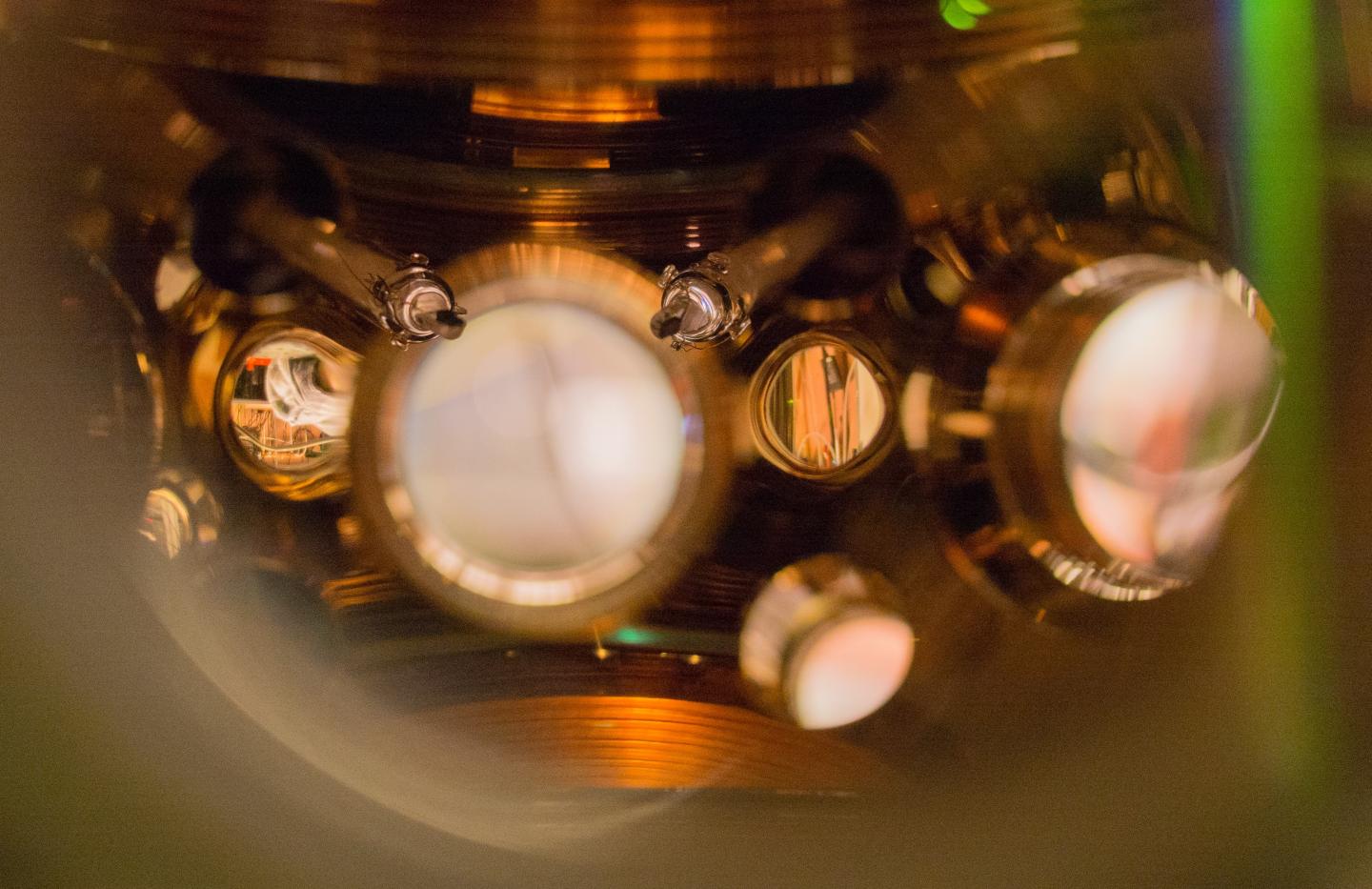
It occurred to me that creating an array of these in MEMS (Micro-Electronic Mechanical System) format, might make an MPI a possibility, as each one would have a slightly different clock speed depending on the location of various masses near it.
The answer is simple, a buko amount of RSS feeds. These are mainly science and technology, with news from both sides of the political spectrum thrown in.
Since Google Reader shut down I have been using http://feedly.com as an RSS reader. This is an opml export from feedly of all the RSS feeds I follow (feedly.opml zip file).
To use it …
Unzip the file
Got to feedly http://feedly.com
Click My Feedly
Click Organize
Click Import OPML and import the feedly.opml file
Like magic, you now have over 200 RSS feeds from various sci, tech, and news sites.
” Since the power of our technology is doubling every year now with no end in sight (at least over the next 50 years or so), our tools will be over a thousand times more powerful in only ten years.”
Germany has recognized bitcoin as “private money”. This is another step toward legitimizing it as a currency. This is not a good thing for world governments, as their power and financing comes from being the middlemen in all financial transactions. They take a percentage of all sales, income, and private transactions in one way or another.
Untraceable digital currency removes them from monetary policy, and sets them up for several scenarios that do not end well. The main issue is one of international inflationary monetary policy, versus an inherently deflationary digital currency.
There are only a limited number of bitcoins that will ever be mined, once that number is reached no more will be produced, there is the first problem. Governments love to print money, as they do the price of all things goes up, this is inflation. With digital currencies the exact opposite occurs. As more people use the currency the higher the price will go, it is basic economics, limited supply -vs- high demand.
A simple thought experiment to show how bad this is for governments. A person walks into a grocery store today and sees loaf of bread for $2 USD or 0.005 bitcoin, he remembers that last year that same loaf of bread cost $1 USD or 0.01 bitcoin. The price of that loaf of bread has doubled in US Dollars and has fallen by one half in bitcoins. Which do you think he will use in the future, the US dollar, which is losing him money over time, or the coinage that continues to rise in value, acting as both an investment and currency, as it is adopted by more people.
This is for the Geneticists, Bio-Geeks, and the synthetic biology crowd. Recently I proposed a method to determine what RNA or mRNA cloned cells use to extend their telomeres. I haven’t gotten a any real response so I thought I would post the question here.
It occurred to me recently that within the next three to seven years there is going to be another crash in the housing market. This time it will not be caused by banks being over leveraged, real estate speculation, or the ineptitude of government. The cause will be new technology, and new manufacturing techniques. Use of technologies similar to Contour Crafting will reduce the cost of constructing a new home substantially. In many cases there will be a 60 to 85 percent decrease in the cost of a new home.
The resulting lower new home prices will devastate the existing homes market. Given the option people will more than likely purchase a home, custom printed to order, with 3 to 5 times the floor space, or opt for new home of the same size at greatly reduced cost. This great disparity in price will carry over to the banking sector, as existing homes become less desirable and difficult or impossible to sell. In the end, the likely results will be existing houses being sold for square foot price equivalent or below that of the newer 3 D printed houses. Over time 3D home printing technology will mature and becomes less expensive. Competition, optimization, and newer technologies will drive prices down even further. Leading to a reduction in new home prices over a period of several years. Towards the end of this downward spiral, many of the old existing homes, will more than likely be sold for their raw land value as people begin consider them boxy, ugly, inefficient energy guzzlers, and undesirable.
With 3 D printing, complex custom houses can be built for the same price, and in the same time, as simple houses with the same floor space. This will end the era of all houses in a development looking identical.
The banks carrying loans on existing homes, that were built by hand, will be dragged down as people opt to purchase new homes that cost substantially less, or have many times the floor space. No amount of government intervention will be able to repair the damage, or save the banks owning these mortgages. This will be a multi-year housing price depreciation, which will also place downward pressure on the prices of the first several generations of houses built using 3 D printing. This fall in housing prices will continue until the automated creation of houses has been fully optimized, and profit margins become extremely slim.
The banks can’t win this one, and neither can landlords. With the continued downward pressure on home prices, will also come a downward price pressure on rents. Landlords with existing rental properties, will find it extremely difficult to rent their properties at a profit, or sell the properties, bankrupting many of them as people move into newer, more efficient, prettier, and less expensive accommodations.
All in all, this one technology is going to cause a serious reallocation of wealth across the entire planet, destroying many current industries and creating many new ones.