
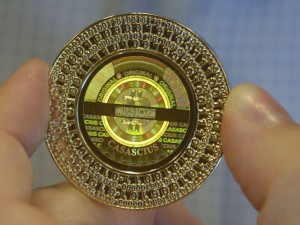
Casascius 25 bitcoin
Germany has recognized bitcoin as “private money”. This is another step toward legitimizing it as a currency. This is not a good thing for world governments, as their power and financing comes from being the middlemen in all financial transactions. They take a percentage of all sales, income, and private transactions in one way or another.
Untraceable digital currency removes them from monetary policy, and sets them up for several scenarios that do not end well. The main issue is one of international inflationary monetary policy, versus an inherently deflationary digital currency.
There are only a limited number of bitcoins that will ever be mined, once that number is reached no more will be produced, there is the first problem. Governments love to print money, as they do the price of all things goes up, this is inflation. With digital currencies the exact opposite occurs. As more people use the currency the higher the price will go, it is basic economics, limited supply -vs- high demand.
A simple thought experiment to show how bad this is for governments. A person walks into a grocery store today and sees loaf of bread for $2 USD or 0.005 bitcoin, he remembers that last year that same loaf of bread cost $1 USD or 0.01 bitcoin. The price of that loaf of bread has doubled in US Dollars and has fallen by one half in bitcoins. Which do you think he will use in the future, the US dollar, which is losing him money over time, or the coinage that continues to rise in value, acting as both an investment and currency, as it is adopted by more people.